
Profiles in Courageousness Chapter 2, Part 1
The Kimbles of Rancho Podrido

Chapter Two
The Kimbles of Rancho Podrido
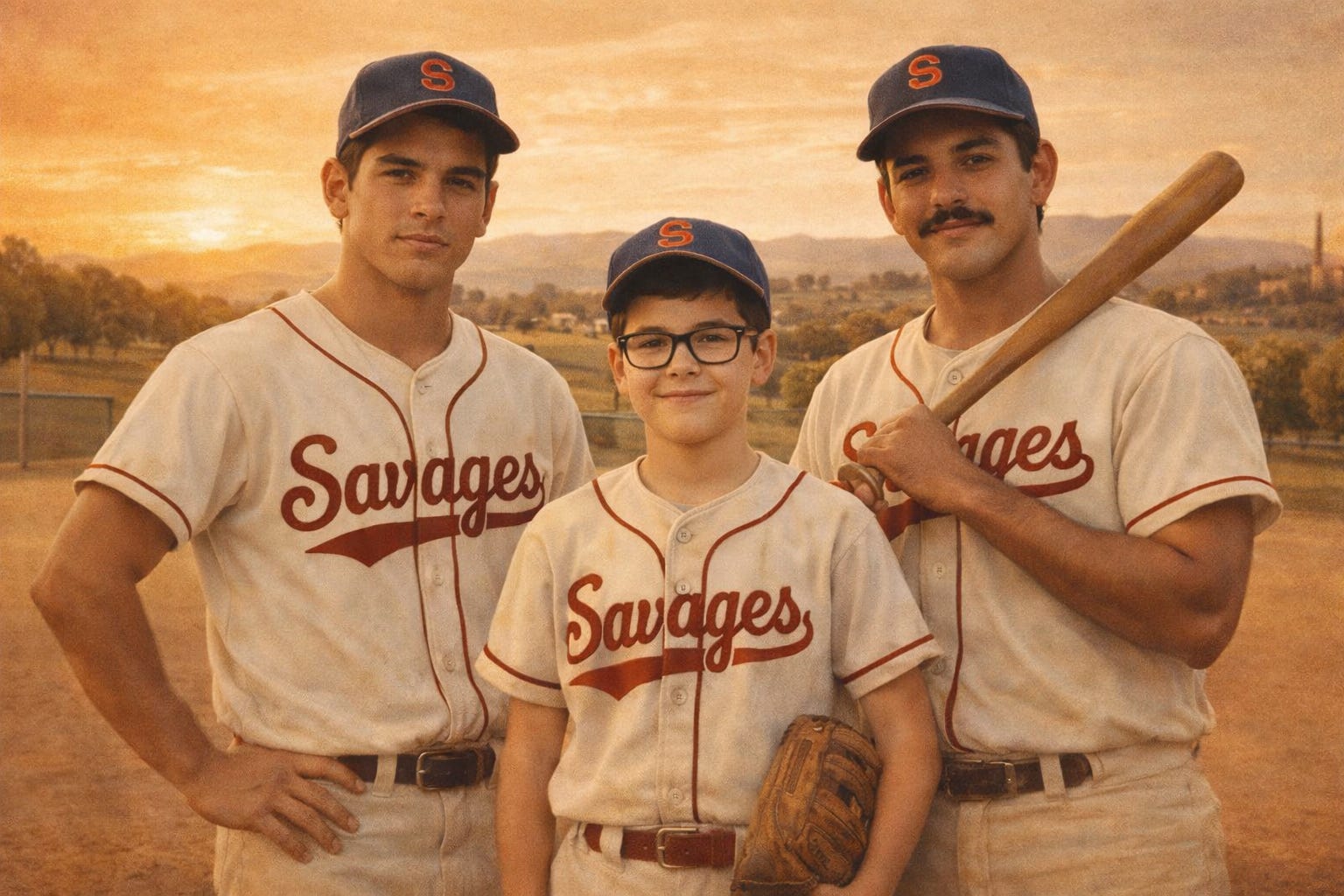
Rancho Podrido was a great place to be born. The name in Spanish means beautiful oasis, and it was named this by California’s first settlers because of its lush fertile fields and a curious odor from the wild flowers that grow in the area. Mom and dad still live there on the original property that my great great grandfather John Kimble first purchased in 1869. My great great grandfather who was a Vermont Yankee had gone down South to make his fortune after the Civil War helping to rebuild the Confederate states. He had done quite well for himself before a disagreement had sent him West.
When he arrived in California, my great-great-grandfather fell in love with a drink called the Martinez which was the forerunner of the modern martini. The drink called for an olive and for my illustrious forbearer, it was love at first sip. He immediately began growing olives on his property. Unfortunately, at this time olive pitting was still done by hand and it was extremely dangerous. Farm workers frequently lost their fingers in olive pitting accidents, and loss of life was sadly not uncommon. In 1874, my great-great-grandfather changed all that with his invention of the Kimble Olive Pitter. That was the beginning for our family’s fortune and prosperity. When John Kimble died in 1915, his estate was valued at over $6,000,000.
With such a sizable fortune, it would have been very easy for the Kimbles to get complacent over the years, but there was always a compulsion towards not only building wealth, but towards service as well. After a large chunk of the Kimble fortune was lost in the Great Depression, my grandfather Warren and his brother, Calvin, built it right back up and then some through public service.
Warren was a very gifted athlete and I like to think that my brothers and I got our talent in sports from him. Like my brother Joe, he was a star pitcher in high school, but his experience with racism was forever ingrained in the Kimble family legacy. You see, my grandfather had looked to pursue baseball professionally, even going as far as buying a train ticket across the country in 1935 to try out with the Pittsburgh Crawfords in the old Negro Leagues. When he got to the ballpark, they took one look at him and told him he was the wrong color. Warren Kimble never even got to throw one curveball before he was rejected out of hand for the color of skin. Dejected, he got on the train departing for California the same day he arrived in Pittsburgh.
December 7, 1941 was a dark day for United States. With a surprise attack, the Japanese had thrust us into the middle of World War II, but America responded. As Hitler told one of his aides, “we have awoken a sleeping giant.” California was put into a turmoil because many in the state felt that they were the next target of the Japanese. This led to tremendous tension between the regular people of California, and the many hard working Japanese who lived there.
As you might imagine, the Kimble men were at the forefront of public defense. They organized air-raid preparedness drills, sold war bonds, and led drives to bring in much needed rubber and scrap metal for the troops overseas. They lobbied hard to get the Japanese in California relocated to camps for their own safety as well as the safety of the normal residents. When the word came down that President Roosevelt had signed Executive Order 9066 mandating that all Japanese be placed in internment camps, Calvin and Warren celebrated. Still, they could not help but feel sorry for the many hard working and patriotic Japanese who risked losing everything. The Kimble men rode to the rescue. They bought the homes and businesses of countless Japanese people, giving them needed money for the camps while at the same time striking good bargains for themselves. By the end of the war, the Kimbles were one of the wealthiest families in California.
When my father was born, Joseph Kimble knew that the size of the family’s holdings would require him to work full time just to manage its own wealth. He knew this would close many doors to him, but he had dreams for his children. I have already mentioned his work with the Robert Engle Society, but he was involved with all aspects of the California government and was a personal friend of celebrities like Pat Boone and Anita Bryant. Still he hoped that one day, one of his sons would grow up to become President.
My mom Angela had been something of a beauty queen. She had competed in the Miss Corn Dog and the Miss Olive pageants, but the happiest day of her life she always told us was in 1956 when she won the Miss Quick Draw Pageant. It wasn’t as large as some of the other competitions my mom had entered, but she was intrigued by the scoring which replaced the question segment of the contest with target shooting. It was while competing at the gun show that she first met my dad. We may have gotten our love of politics and conservative values from my dad, but it was our mom who instilled in us our love of guns and our good looks.
Unfortunately, we didn’t inherit my mother’s musical ability. In that short lived period of the late 50s and early 60s before the Beatles, when folk was king, my mother was in a folk group called The Amalgamated Singers. They released exactly one album called Office Romance. Nowadays, it is incredibly hard to find. However, they were groundbreakers.
The Amalgamated Singers were formed in 1960 by my mother and 4 other musicians who believed that folk musicians of the time focused too much on blue collar issues and liberal social causes. Their music attempted to give the other side equal say. Songs like The Mine Owner’s Lament, Tax Bracket Blues, and How We Broke the Strike of ‘92 gave encouragement to white collar workers and professionals. They were the only folk group to sing about the need for a strong nuclear deterrent against Soviet expansion.
Sadly, like a shooting star they were gone too fast. They broke up by 1962, and my mom had my older brother and quit performing, but one of my fondest memories of childhood was laying on the floor and listening to my mother sign along with the song The Mine Owner’s Lament as she bemoaned the difficulties of finding new miners to replace those dead when a mine shaft caved in.
Growing up, I had two brothers and one sister. Joe Jr. was the oldest Kimble and was expected to be the one to go on to glory. He had movie star good looks, and he was a straight A student while playing quarterback for the football team. Robert was my younger brother who was both brilliant and a terrible pest. My sister Gladys rounded out the family. I think she’s around my age. I know she was a couple of years ahead of me in school.
When it came to raising us boys, my parents followed one simple philosophy. Give children guidance, but let them make their own mistakes. My parents did not coddle. My father was so busy with his politics and his work, and my mother was always so occupied with her social responsibilities and her Miltown and Librium, that they simply refused to smother us. They would let us do our own thing and then only get involved if there were problems or repercussions for our actions. I couldn’t count how many tough situations my dad got us out of by a shrug of his shoulders, a sigh, a “boys will be boys”, and an open check book.
Rancho Podrido was a sweet start in life. The weather can be brutal when driving rains and mud wash out Sutter Street or the fires in the hills threaten to encroach on the beautiful and pastoral landscapes of the town below. There is something special about the salty smell of the ocean air and the way it mixes with the fumes from the carpet factory in the autumn when long walks and contemplation are best. The sunsets are a bright and vibrant shade of burnt orange that exists nowhere else on the planet. My mother has been trying to dye her hair that color for 30 years, but it simply cannot be done.
When I think back to my childhood, I remember walking by the town’s taverns with my brothers looking for drunks who had passed out so that we could poke them with a stick. I remember baseball games and my father yelling at the coaches, umpire, and other parents. I remember Catholic School and arguing with the nun that taught math class that borrowing was a ridiculous concept when three minus five was negative two and borrowing would simply incur unneeded debt.
I shared a bedroom with my brother Robert, while Joseph Jr. had his own bedroom and Gladys slept in a closet I think. Trying to get to bed with Robert around was nearly impossible. He would keep you up half the night with questions, and then when you had just drifted off to the first moments of slumber, he’d have another question to ask and you’d never be able to get back to sleep.
We didn’t have Little League in Rancho Podrido, but we did have baseball. After World War II, a farmer by the name of Charlie Pickens created 2 very nice baseball fields on his land, and Pickens League baseball was started. When Charlie passed away in 1964, the town bought the land from his widow. By then Pickens League baseball was drawing 50 players every year between the ages of nine and twelve for a league. My older brother Joe had been a star pitcher for his team and led them to the championship in 1970 and 1971. Unfortunately, Bobby and I weren’t as talented as Joe was.
The four teams in our league were called The Braves, Indians, Red Skins, and Savages. They had originally all been sponsored by a cigar shop with an Indian motif. My team was the Savages, and we were inept. Our coach was a nice man and a very positive role model named Frank Kraft. Unfortunately, Frank always seemed more interested in us learning how to do things the right way, exhibiting good sportsmanship, and having fun, then winning. This made us the laughing stock of the league. He refused to yell at his players no matter what they did. It got so bad, that fathers and the occasional mother in the stands would have to hold up the game to run out on the field and berate their own children. The whole time Frank was in the dug out yelling things like, “Good try Jeremy. You’ll get them next time.”
My dad tried to get Kraft to resign as coach, but he wouldn’t budge. Fortunately, my father didn’t give up either. When my dad bought new uniforms for every team in the league, they agreed to let him be co-manager. Calling Frank Kraft an equal decision making partner with my dad would be like saying Dick Cheney consulted with President Bush on the tough decisions he had to make to run this country during his eight years as Vice-President. The truth is my dad had such a powerful personality that Kraft soon learned to keep himself occupied keeping score and redrawing the chalk lines on the base paths.
When my dad took over as manager, the first thing he did was to let my brother Bobby and I pitch. Frank Kraft had refused to let us pitch because we had trouble getting the ball anywhere near the plate, but my dad used that as a strength. He hired the 16 year old boys who umpired our games to work for him and immediately the calls in our games improved. Bobby and I soon became star pitchers in our own right as we found ways to pitch the ball where it would be called a strike, but where nobody could possibly reach it. I specialized in bouncing it in to home plate just under the hitters bat.
My dad was inspired by the way his own father had helped the Japanese-Americans in World War II to try to do something for the Mexican workers in his fields. He believed that nothing could help Americanize the boys like the game of baseball could. I remember how shocked I was when five Mexican boys showed up at our field one day during practice. At first I thought they were there to mow the grass. These boys looked nothing like us. Their skin was a leathery brown from being in the hot sun all summer. Three of them were six feet tall. Two had mustaches. My dad informed me, “Mexican boys just mature faster.” At first there was a big stink created by the parents on other teams. This was my first experience with prejudice first hand. These were good kids, no different from me or my friends—only Mexican. Jorge was so in love with his new country that when he was drafted in June, he went to Vietnam instead of telling the draft board that he was only 11. We could have really used his bat for the championship.
Vinnie, Ivan, Guillermo, Ricardo, Bobby, and I won the championship in the summer of 1973. The season taught me that if you want anything bad enough, you can achieve it through teamwork and cooperation. It taught me that losing is for losers, and that any game worth competing in, is worth winning. Above all, it instilled in me the love of athletics and youth sports that I still have to this day.
I went to Our Lady of Perpetual Sorrows Grammar School where discipline and academic excellence were the order of the day. Our Lady had a long tradition of excellence and fiscal conservatism which was refreshing to see in a religious school at the time. The school’s principal was Sister Agnes who had first joined the convent after breaking up with her fiancé only a year after meeting him at the Columbian Exposition in Chicago in 1893. She stood less than five feet tall, and she had to use a cane, which made a very effective weapon for intimidating unruly 8 year old boys like me. Being called into her office meant a hard grilling, not just on what you did, but on your faith as well. I will always remember when I got in trouble for stealing from the missions, “Your crime Jack, isn’t that you stole a dollar, it’s that you wasted it,” she said, “What if you had bought four candy bars with that dollar and sold them for fifty cents each. You could have repaid the mission with interest and still kept a generous cut for yourself.”
In the 1960s and 1970s the Catholic Church was going through a very tough time trying to find its way after the sweeping changes of Vatican II. My father, in particular, was very paranoid about the priest now facing the congregation. He insisted for over a decade that our pastor was spying on him. Our Lady of Perpetual Sorrows seemed very far removed from this new wave of change spreading through the Catholic Church like small pox through an Indian reservation. Economists nowadays would say that what the nuns taught us was supply side economics, but the term hadn’t even been invented yet. What they taught us was good old fashioned morals, and a faith that the best way to help people and follow Jesus was not to throw money at poor people who in desperate times would simply be tempted to spend it all on booze. Instead, we should do what we could to help the responsible members of our community who owned businesses and would be able to hire the homeless if only we would lower the taxes these businessmen paid.
You certainly are a savage still, at least in wit.
It's so inspiring to hear about the real and lasting values that the influences in your lives taught you. If more children valued winning over fair play and wealth over sharing, America wouldn't be in such dire and Hormuz Straits today